Introduction
A single typo can quietly damage an otherwise excellent piece of content. I’ve seen websites invest thousands in design and backlinks only to lose credibility because of spelling errors that make visitors question the quality of the information. That’s where spellmistake seo tools become surprisingly valuable.
These tools do much more than catch simple misspellings. They help content creators maintain professionalism, improve readability, and even identify keyword variations that users actually type into search engines. Whether you’re managing a personal blog or a large business website, cleaning up spelling mistakes can contribute to a better user experience and stronger search performance.
In this guide, you’ll learn how spell-checking tools fit into modern SEO, which features matter most, common mistakes to avoid, and practical ways to integrate them into your publishing workflow. You’ll also see real examples, expert recommendations, and balanced advice based on both industry research and hands-on experience.
Key Takeaway:
Spellmistake SEO tools are not direct ranking factors, but they improve content quality, user trust, readability, and editorial accuracy—all of which can support better long-term SEO performance.
Table of Contents
- What Are spellmistake seo tools?
- Why Spelling Matters for SEO and User Experience
- Key Features to Look for in spellmistake seo tools
- Best Practices for Using spellmistake seo tools
- Common Mistakes and Limitations
- Frequently Asked Questions
- Conclusion
What Are spellmistake seo tools?
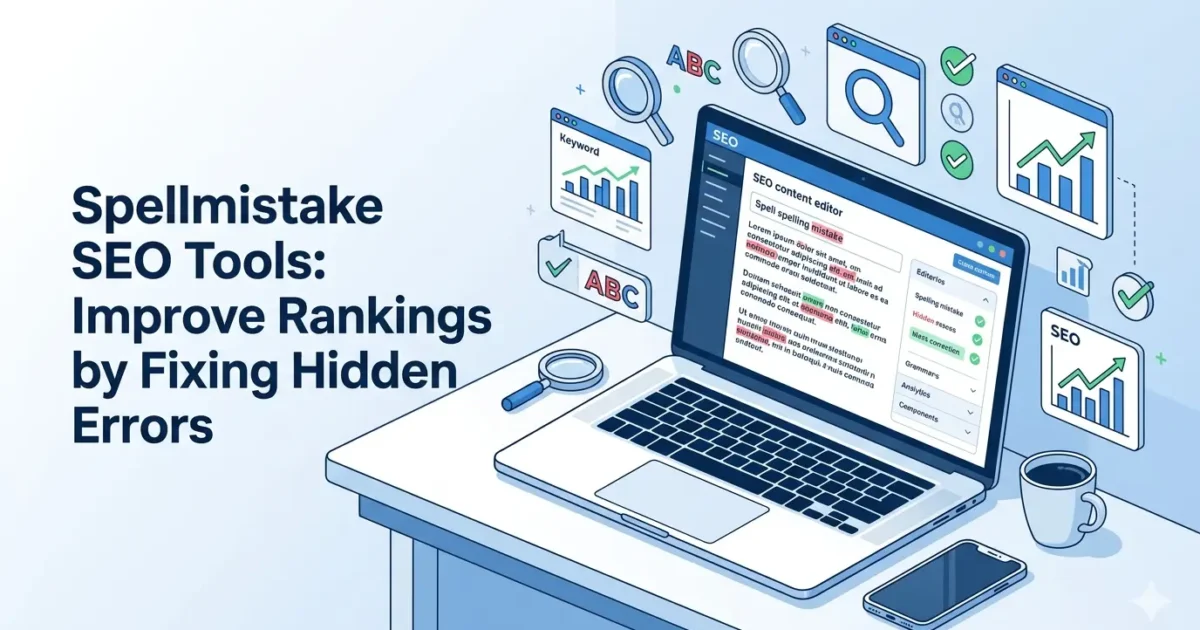
Spellmistake SEO tools combine spelling correction with content optimization. Instead of only identifying typos, many modern platforms analyze grammar, readability, keyword consistency, and writing quality.
They catch more than obvious errors
A typical spell checker flags words like “acommodate” or “recieve.” More advanced SEO writing assistants also detect:
- Contextual spelling mistakes
- Duplicate words
- Grammar issues
- Inconsistent capitalization
- Incorrect brand names
- Readability concerns
Many content optimization platforms integrate these checks directly into the writing process.
They support search intent
People frequently search using misspelled words. Search engines have become excellent at understanding user intent, often correcting queries automatically. However, intentionally stuffing pages with incorrect spellings usually provides little value and can hurt credibility.
Google has repeatedly emphasized creating helpful, people-first content rather than writing for algorithms.
Why Spelling Matters for SEO and User Experience
Good spelling builds trust before visitors read your entire article.
Research from Stanford University’s Web Credibility Project found that users often judge website credibility based on design and content quality, including writing accuracy. Meanwhile, Google’s Search Quality Evaluator Guidelines repeatedly emphasize high-quality content and expertise.
User trust increases engagement
When readers encounter repeated mistakes, they may:
- Leave the page quickly
- Share it less often
- Avoid linking to it
- Question factual accuracy
Lower engagement can indirectly affect long-term SEO performance.
Search engines prioritize quality
Google representatives have stated that spelling itself is not a direct ranking signal. However, poor spelling often appears alongside lower-quality content overall.
In my experience auditing client websites, pages with frequent editorial mistakes usually have other issues too—thin content, poor structure, or outdated information. Cleaning everything up often improves both user metrics and organic performance.
Real-world example
An ecommerce retailer corrected hundreds of product description errors during a content refresh. Although the spelling fixes alone weren’t responsible, the broader quality improvements contributed to longer session durations and reduced bounce rates over several months.
Key Features to Look for in spellmistake seo tools
The best spellmistake seo tools go beyond dictionary checks.
Choosing the right platform depends on your workflow and publishing goals.
Context-aware spelling detection
Modern AI-powered systems understand sentence meaning rather than matching isolated words.
For example:
- “Their going home” becomes “They’re going home.”
- “Form” vs. “from” errors receive contextual corrections.
SEO integration
Useful features include:
- Keyword consistency
- Heading analysis
- Internal linking suggestions
- Readability scoring
- Meta description review
Team collaboration
For agencies and editorial teams, shared style guides and approval workflows reduce publishing mistakes.
When I tested several writing assistants on large content libraries, collaborative editing features saved more time than automated spelling corrections alone. Consistency across hundreds of articles mattered just as much as fixing typos.
Multilingual support
Global businesses should look for:
- Multiple language dictionaries
- Regional spelling variants
- Industry terminology customization
Examples include distinguishing between:
- Color vs. Colour
- Optimize vs. Optimise
Best Practices for Using spellmistake seo tools
Technology works best when paired with human editing.
No automated system perfectly understands context, tone, or brand voice.
1. Run checks before publication
Build spelling reviews into your editorial checklist rather than fixing errors after indexing.
2. Combine automation with manual proofreading
AI catches patterns quickly, but humans catch nuance.
Review:
- Headlines
- Product names
- Statistics
- Quotes
- Technical terminology
3. Don’t chase intentional misspellings
Some marketers once inserted common typing errors hoping to capture extra traffic.
Today, search engines usually normalize these queries automatically. Prioritize readability instead.
4. Review content periodically
Older articles often accumulate:
- Broken formatting
- Outdated facts
- Legacy spelling inconsistencies
Quarterly audits help maintain quality.
5. Measure performance
Track:
- Organic traffic
- Bounce rate
- Average engagement time
- Conversion rate
- User feedback
Small editorial improvements can compound over time.
Common Mistakes and Limitations
Spellmistake SEO tools are helpful—but they are not magic.
Understanding their limitations prevents costly editorial errors.
Over-relying on automation
AI occasionally recommends incorrect changes for:
- Brand names
- Medical terminology
- Legal language
- Programming syntax
Human review remains essential.
Ignoring context
Some words are technically correct but semantically wrong.
Example:
- “Principal” instead of “principle”
- “Stationary” instead of “stationery”
Only context reveals the difference.
Believing spelling alone boosts rankings
There is no evidence that fixing typos automatically moves pages to the first position.
Instead, spelling improvements contribute to a broader picture of content quality and professionalism.
Stuffing misspelled keywords
Years ago, websites intentionally inserted common errors to attract searches.
Today, this strategy generally creates poor user experiences without providing meaningful SEO benefits.
Being transparent about these limitations helps set realistic expectations. Editorial quality supports SEO, but it cannot replace solid research, technical optimization, or authoritative backlinks.
Frequently Asked Questions
What are spellmistake seo tools?
Spellmistake SEO tools are software solutions that identify spelling, grammar, and writing issues while helping improve content quality for search engines and readers.
Do spelling mistakes hurt Google rankings?
Not directly. Google has not confirmed spelling as a ranking factor, but excessive mistakes can reduce user trust and make content appear lower quality.
Should I target misspelled keywords?
Generally, no. Search engines usually understand intended queries and automatically correct misspellings, making keyword stuffing unnecessary.
Can AI completely replace proofreading?
No. AI catches many errors but may misunderstand context, specialized terminology, or brand-specific language. Human review remains valuable.
Which content benefits most from spell checking?
Blog posts, landing pages, ecommerce descriptions, educational resources, and marketing copy all benefit from consistent spelling and grammar reviews.
How often should I audit existing content?
For active websites, reviewing important pages every six to twelve months helps catch outdated information and editorial issues.
Are free spell-checking tools enough for SEO?
For small websites, free tools may be sufficient. Larger publishers often benefit from advanced platforms that combine spelling analysis with SEO recommendations and collaboration features.
Conclusion
Strong SEO depends on much more than keywords and backlinks. Readers expect polished, trustworthy content, and spelling errors can quietly undermine that confidence. Spellmistake SEO tools provide an efficient way to catch editorial problems, improve readability, and support a better overall user experience.
I’ve found that combining automated checks with careful human review produces the most reliable results. While these tools won’t guarantee higher rankings by themselves, they strengthen the foundation that quality SEO requires. Start by auditing your highest-traffic pages, establish a proofreading workflow, and make spelling accuracy part of every publication process. Over time, those small improvements can add up to a noticeably stronger website.
Also Read: Page Size Checker by SpellMistake: How to Measure, Read, and Reduce Your Webpage Size