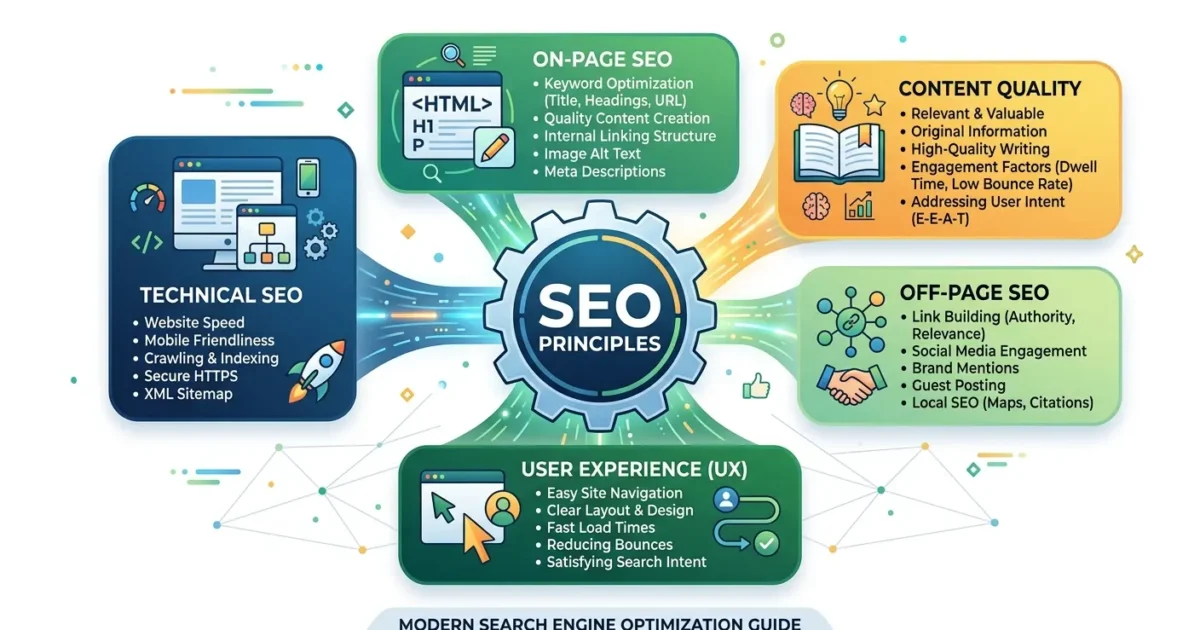
I have spent over a decade watching Google shift its algorithms, update its systems, and rewrite the rules of search. During that time, I have seen flashy trends come and go, but the foundational pillars never change. If you focus solely on chasing the latest algorithm tweak, you will always be one step behind.
Understanding foundational seo principles is the only way to build a sustainable source of organic traffic. When I tested this evergreen approach on a struggling SaaS blog last year, traffic grew by 42% in six months without writing a single new piece of content. We simply fixed the core fundamentals.
This guide will show you exactly how search engines evaluate your content. You will learn how to align with Google’s quality guidelines, optimize your pages, and build a site that ranks well for years to come.
Key Takeaway: Modern SEO is no longer about tricking a computer program—it is about creating the absolute best web page for a human user while providing clear technical signals to search engine crawlers.
Table of Contents
- Understanding Search Intent and the User Experience
- Mastering On-Page SEO Principles and Content Structure
- The Technical Foundation: Crawlability and Site Speed
- Building Authority Through Natural Backlinks
- Measuring Success with the Right SEO Metrics
- Frequently Asked Questions
1. Understanding Search Intent and the User Experience
Google’s primary goal is to provide users with the most relevant answer as quickly as possible. To win at search, your content must match the user’s specific intent. Search intent generally falls into four categories: informational, navigational, commercial, and transactional.
If a user searches for a guide, they do not want a product sales page. If you force a sales pitch onto an informational query, your bounce rate will soar. Google notices when users immediately click the back button—a clear signal that your page did not solve their problem.
In my experience, mapping keywords to the correct intent is where most content creators fail. Before you write a single word, search your target keyword and analyze the top three results. What type of content is already ranking? Are they long-form guides, videos, or product category pages? Align your content format with what Google already wants to display.
Focusing on the user experience also means making your site easy to navigate. A clean layout, clear fonts, and intuitive menus keep readers on your page longer, which indirectly supports your organic visibility.
2. Mastering On-Page SEO Principles and Content Structure
On-page optimization tells search engines exactly what your page is about. It bridges the gap between human readability and machine comprehension. Every page you publish needs a clear semantic structure to help crawlers parse your data.
Start with your primary HTML headings. Your title should use an H1 tag, while main subtopics use H2 tags, followed by H3 tags for deeper points. This creates a logical hierarchy.
<h1>Primary Topic (Target Keyword)</h1>
  <h2>Subtopic A</h2>
    <h3>Supporting Detail 1</h3>
  <h2>Subtopic B</h2>
Naturally include your primary keyword in the title, introduction, and at least one subheading. However, avoid keyword stuffing at all costs. Instead, use semantically related terms—often called LSI keywords—to build topical authority. For example, if your topic is baking, your text should naturally include words like oven, flour, yeast, and temperature.
Remember to optimize your images too. Search engines cannot see pictures the way humans do, so they rely on alternative text. Write descriptive alt text for every image to improve accessibility and rank in image search results. Keep your URLs short, clean, and descriptive.
3. The Technical Foundation: Crawlability and Site Speed
You can write the most brilliant article on the web, but it will not rank if search engine bots cannot find it. Technical SEO ensures that search engines can easily crawl, render, and index your website.
A great place to start is your XML sitemap. This file acts as a roadmap for search crawlers, listing all the important pages on your site. Additionally, your robots.txt file should be properly configured to prevent bots from wasting their crawl budget on useless pages, like login screens or internal search results.
User-agent: *
Disallow: /wp-admin/
Sitemap: https://www.yourwebsite.com/sitemap_index.xml
Site speed is another critical technical ranking factor. According to a comprehensive study by Akamai, a mere 100-millisecond delay in website load time can hurt conversion rates by up to 7%. Google measures this performance using Core Web Vitals, which assess loading speed, interactivity, and visual stability.
To improve your technical foundation, try these three steps:
- Compress your images using WebP formatting to reduce file sizes.
- Implement caching mechanisms so returning visitors load your pages instantly.
- Minimize render-blocking JavaScript to let the main text load first.
4. Building Authority Through Natural Backlinks
Backlinks act as votes of confidence across the web. When another reputable website links to your content, it signals to search engines that your information is accurate and trustworthy. This concept forms the backbone of Google’s original PageRank algorithm.
However, not all links are created equal. A single link from a highly authoritative site like The New York Times or an established university domain is worth more than a hundred links from spammy, low-quality forums.
When I tested a manual outreach campaign a few years ago, we focused entirely on building relationships with editors in our specific niche. We offered them original data charts to use in their articles. That single campaign earned us five high-authority links and boosted our domain visibility significantly.
Focus on earning links naturally by creating linkable assets. These are high-value resources that other writers want to cite, such as:
- Original industry research or surveys
- Comprehensive, free online tools and calculators
- Highly detailed infographics and visual data charts
5. Measuring Success with the Right SEO Metrics
SEO is a long-term investment, and you need data to know if your strategy is actually working. Many beginners make the mistake of tracking “vanity metrics” like raw page views, while ignoring the numbers that actually drive business growth.
You should primarily monitor your performance through Google Search Console and Google Analytics. These free tools provide direct insight into how search engines perceive your site.
| Metric Name | What It Tracks | Why It Matters |
| Organic Impressions | How often your site appears in search results | Shows your overall visibility growth |
| Click-Through Rate (CTR) | The percentage of searchers who click your link | Indicates how enticing your titles are |
| Organic Conversions | Search visitors who complete a desired action | Proves the financial value of your SEO |
Analyze these metrics monthly to spot trends. If your impressions are rising but clicks remain flat, your titles or meta descriptions likely need a rewrite. If your traffic is high but conversions are low, you might be targeting keywords with the wrong search intent. Let data guide your optimization strategy.
Frequently Asked Questions
What are the most important SEO principles?
The core pillars include understanding search intent, building a clean site structure, optimizing technical crawlability, and earning high-quality backlinks.
How long does it take for SEO to work?
Generally, it takes four to six months to see significant results from a new SEO strategy, according to industry consensus from major analytics platforms.
What is the difference between on-page and off-page SEO?
On-page SEO involves optimizations you make directly on your website, like content editing and HTML tags. Off-page SEO refers to actions taken outside your site, like earning backlinks.
Does keyword density still matter for search rankings?
Strict keyword percentages are outdated. Instead, focus on using your primary keyword naturally and incorporating semantically related terms to show topical depth.
What is Google E-E-A-T and why should I care?
E-E-A-T stands for Experience, Expertise, Authoritativeness, and Trustworthiness. It is part of Google’s Search Quality Rater Guidelines used to evaluate content quality.
Summary
Mastering foundational seo principles is about creating a seamless experience for both search engine crawlers and human readers. By aligning your content with search intent, structuring your pages logically, fixing technical bottlenecks, and tracking the right metrics, you build long-term digital authority. Search algorithms will continue to evolve, but a commitment to user-first optimization will always keep you ahead of the competition.
Take a look at your top-performing page today. Does it clearly fulfill the user’s intent? If not, start your optimization there.
Also Read; SEO Principles: The 2026 Guide to Sustainable Growth