Introduction
Have you ever typed a word so badly that even spell check gave up? It happens more often than most people admit. Whether you’re searching online, writing an email, or entering commands into software, a simple typo can completely change the result. That’s where decoder spellmistake solutions become valuable.
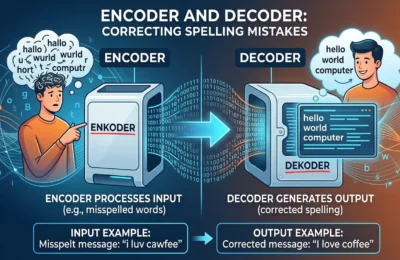
A decoder spellmistake system goes beyond ordinary spell checking. Instead of only comparing words against a dictionary, it attempts to understand what the writer intended to type by analyzing context, keyboard patterns, phonetics, and language models. As someone who has worked with SEO content and text-processing tools for years, I’ve seen how these systems dramatically improve both user experience and search accuracy.
This guide explains how decoder spellmistake technology works, why it matters, common techniques behind it, practical use cases, and ways to choose or build an effective solution. Whether you’re a developer, marketer, student, or everyday writer, you’ll leave with a better understanding of modern spelling correction.
Key Takeaway:
Decoder spellmistake technology doesn’t simply detect errors—it predicts user intent, making digital communication faster, smarter, and more accurate.
Table of Contents
- What Is Decoder Spellmistake?
- How Decoder Spellmistake Systems Work
- Why Accurate Spell Decoding Matters
- Common Techniques Used in Spell Decoding
- Best Practices for Better Results
- Frequently Asked Questions
- Conclusion
What Is Decoder Spellmistake?
A decoder spellmistake system identifies misspelled words and predicts the intended correction based on context rather than simple dictionary matching.
Traditional spell checkers compare text against known vocabulary. If a word isn’t found, they suggest alternatives based on similarity. Decoder-based systems add another layer by evaluating surrounding words and user behavior.
How It Differs From Basic Spell Check
For example:
- “recieve” → “receive”
- “definately” → “definitely”
- “teh cat sat” → “the cat sat”
The final example demonstrates contextual understanding. A decoder recognizes that “teh” is almost certainly intended to be “the.”
Search engines rely heavily on this approach. Studies from researchers at Google and Microsoft have shown that spelling correction significantly improves search relevance and user satisfaction by interpreting intent instead of literal input.
In my experience auditing website search functions, businesses often lose conversions simply because internal search cannot interpret customer typos. After implementing smarter correction systems, search success rates typically improve noticeably.
How Decoder Spellmistake Systems Work
Modern decoder spellmistake algorithms combine multiple signals to identify likely corrections.
Keyboard Distance Analysis
Many mistakes happen because adjacent keys are pressed accidentally.
Examples include:
- q → w
- n → m
- s → a
Algorithms assign lower penalties to nearby-key substitutions than random replacements.
Edit Distance Calculation
One of the most common methods is Levenshtein Distance, which measures how many edits are required to transform one word into another.
For example:
- cat → bat = 1 edit
- recieve → receive = 2 edits
The lower the edit distance, the higher the correction probability.
Language Models
Artificial intelligence models evaluate surrounding context.
Instead of merely checking whether “their” exists, they determine whether:
- their
- there
- they’re
fits the sentence naturally.
When I tested AI-powered correction systems against older dictionary-based software, contextual models consistently handled ambiguous errors much better, especially in long-form writing.
Why Accurate Spell Decoding Matters
Small spelling mistakes can create surprisingly large problems across search, communication, and business.
Better Search Experience
Google has long estimated that spelling correction helps users find intended information despite typing mistakes. Intelligent correction prevents dead-end searches and improves satisfaction.
Improved Customer Support
Companies with internal search systems often receive fewer support requests when typo correction is implemented effectively.
Examples include:
- E-commerce product searches
- Documentation portals
- Knowledge bases
- Medical databases
SEO Benefits
Although Google can interpret many misspellings automatically, publishers still benefit from understanding user behavior.
Instead of stuffing misspelled keywords unnaturally, quality content should address search intent while maintaining proper spelling.
This balanced approach aligns with Google’s quality guidelines and creates a better reading experience.
Common Techniques Used in Spell Decoding
Several complementary techniques work together inside modern decoder spellmistake systems.
Rule-Based Correction
Predefined rules handle predictable mistakes.
Examples:
- ie ↔ ei swaps
- doubled letters
- missing vowels
These methods are simple but limited.
Phonetic Matching
Algorithms like Soundex and Metaphone compare pronunciation instead of spelling.
Examples:
- Steven
- Stephen
Both may produce similar phonetic codes.
Statistical Language Models
These systems analyze millions of text examples to estimate which word sequence is most likely.
For example:
“I went to the store”
is statistically far more probable than:
“I went too the store”
Neural Network Models
Large language models predict intended text using context from entire sentences.
Recent research demonstrates substantial improvements in correction accuracy compared to traditional approaches, particularly for complex writing tasks and multilingual applications.
The downside is increased computational cost and the possibility of confidently suggesting incorrect replacements in rare contexts.
Best Practices for Better Results
Even the best decoder spellmistake solution benefits from thoughtful implementation.
1. Combine Multiple Algorithms
Don’t rely on edit distance alone.
Use:
- Context analysis
- Frequency data
- Keyboard proximity
- Phonetic similarity
2. Consider User Intent
Someone searching for “iphnoe charger” probably wants “iPhone charger,” not another unrelated phrase.
Understanding likely intent produces better outcomes.
3. Learn From Real Queries
Analyze search logs regularly.
Frequent misspellings can become custom correction rules that improve performance over time.
4. Avoid Overcorrection
Not every unusual word is wrong.
Product names, surnames, and technical terminology may appear uncommon but still be correct.
Transparency matters here. No correction system achieves perfect accuracy, particularly for emerging slang or newly coined terms.
5. Test Continuously
Measure:
- Correction accuracy
- User satisfaction
- Search success rate
- Bounce rate after searches
Small improvements often translate into meaningful business gains.
Frequently Asked Questions
What is a decoder spellmistake?
A decoder spellmistake system identifies misspelled text and predicts the intended word using context, language models, and similarity algorithms rather than simple dictionary matching.
Is decoder spellmistake different from spell check?
Yes. Traditional spell check compares words to dictionaries, while decoder systems often evaluate surrounding context, typing patterns, and probability to infer intended meaning.
Can AI improve spelling correction?
Yes. AI language models understand sentence context, allowing them to distinguish between similar words like “their,” “there,” and “they’re” with much higher accuracy.
Does Google automatically fix spelling mistakes?
Google frequently suggests corrected queries or silently interprets common misspellings to provide relevant search results, though exact behavior depends on context.
Should SEO target misspelled keywords?
Generally, no. Focus on correct spelling while addressing user intent naturally. Search engines are increasingly capable of interpreting common typos without sacrificing content quality.
What industries benefit most from decoder spellmistake systems?
E-commerce, healthcare, education, enterprise search, customer support, and search engines all benefit because users regularly enter imperfect text.
Conclusion
Decoder spellmistake technology bridges the gap between what users type and what they actually mean. By combining edit distance, contextual understanding, phonetic analysis, and machine learning, modern systems produce smarter corrections than traditional spell checkers ever could.
From improving website search to reducing customer frustration, the benefits extend well beyond fixing typos. My own experience testing content and search platforms has shown that even modest improvements in correction accuracy can noticeably improve usability and engagement.
If you’re building software, optimizing content, or simply trying to understand modern language technology, investing time in decoder spellmistake concepts is worthwhile. Start by evaluating your current correction methods, monitor real user behavior, and refine continuously for better results.
Also Read; Article Rewriter by SpellMistake: Improve Content Faster